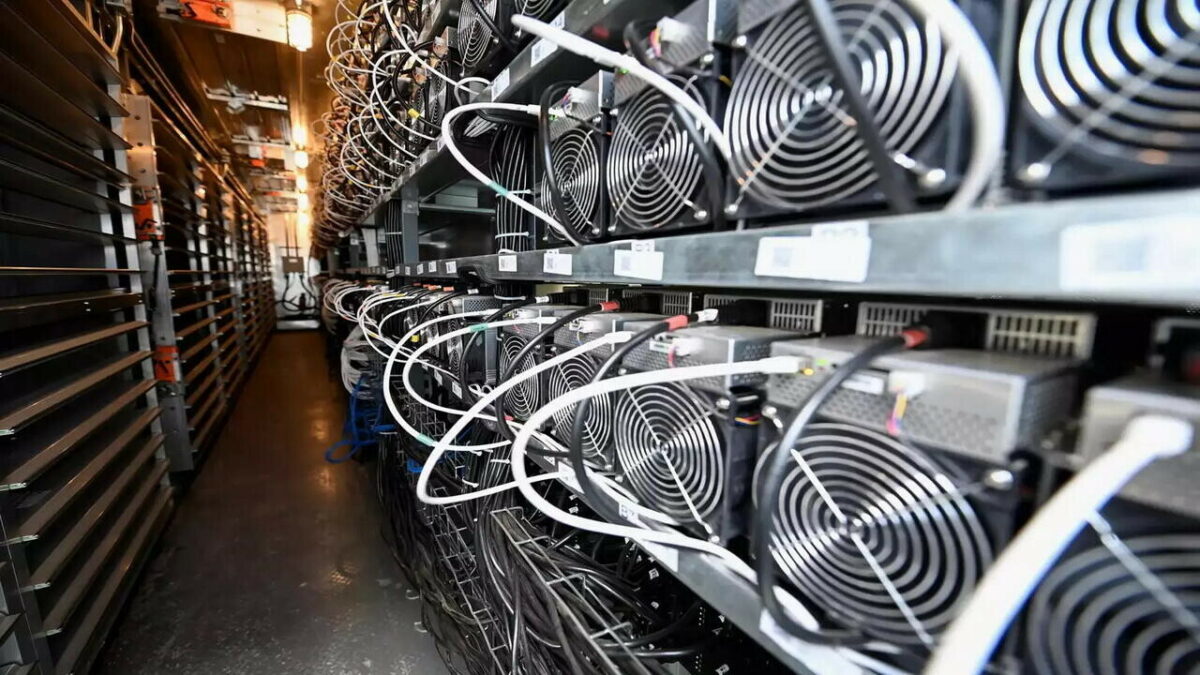
A bitcoin mining profitability calculator is often the first tool miners turn to when asking, «Will I make money mining Bitcoin?» But true understanding goes far beyond plugging numbers into a website. Mining profitability depends on multiple complex factors—hardware efficiency, electricity costs, network difficulty, and market volatility—not all captured by simple tools.
This guide aims to teach you how to be your own calculator. We’ll break down every key variable, examine real-world profitability scenarios, and help you interpret what the numbers truly mean for your ROI. For those facing unfavorable outcomes, we’ll also explore realistic alternatives to traditional mining to help you pivot strategically.
The 5 Core Variables of Any Mining ROI Calculator
Understanding the inputs that go into profitability calculations is critical:
- Hash Rate
Measures your equipment’s computational power, usually in terahashes per second (TH/s) or gigahashes per second (GH/s). More hash means a higher chance of earning rewards.Common ASIC miners and their hash rates:- Antminer S19 XP: 140 TH/s
- Antminer S19 Pro: 110 TH/s
- Whatsminer M50: 118 TH/s
- Power Consumption
Watts (W) your hardware consumes during operation. Efficiency is judged by how many watts used per TH/s.Corresponding power draw for popular ASIC miners:- Antminer S19 XP: 3010 W
- Antminer S19 Pro: 3250 W
- Whatsminer M50: 3276 W
- Electricity Cost
Usually billed in dollars per kilowatt-hour ($/kWh), this is the single most important factor affecting profitability. To answer is mining profitable with my electricity cost? check your utility bill under “Rate” or “Cost per kWh.”Average US residential electricity rates vary widely:- California: $0.25/kWh
- Texas: $0.12/kWh
- Washington: $0.10/kWh
- Louisiana: $0.08/kWh
- Pool Fees
Mining pools charge fees, typically between 1–2%, deducted from your earnings for access and payout management. - Bitcoin Price & Network Difficulty
External factors that fluctuate daily. Difficulty adjusts roughly biweekly based on total network hash power; Bitcoin price drives fiat value of rewards.
Mining Profitability Analysis: Real-World Scenarios and Tables
Using an Antminer S19 XP as a benchmark, here’s how profitability changes based on electricity rates and hardware:
Profitability at Different Electricity Costs ($/kWh)
| Electricity Cost ($/kWh) | Estimated Daily Cost | Estimated Daily Revenue | Estimated Daily Profit/Loss |
|---|---|---|---|
| 0.05 | $1.20 | $3.50 | +$2.30 |
| 0.12 | $2.88 | $3.50 | +$0.62 |
| 0.25 | $6.00 | $3.50 | -$2.50 |
| 0.40 | $9.60 | $3.50 | -$6.10 |
Comparing Different Miner Models (Electricity Cost Fixed at $0.15/kWh)
| Miner Model | Hash Rate (TH/s) | Power Draw (W) | Daily Profit/Loss |
|---|---|---|---|
| Antminer S19 XP | 140 | 3010 | +$0.15 |
| Antminer S19 Pro | 110 | 3250 | -$1.05 |
| Whatsminer M50 | 118 | 3276 | -$0.90 |
Interpreting Your Scenario: What the Data Tells You
- The Profit Zone: Electricity costs below ~$0.10/kWh give you the best chance at profitable mining with current ASICs.
- The Danger Zone: Between $0.10 and $0.20/kWh, profitability is marginal and sensitive to Bitcoin price swings and difficulty increases.
- The Loss Zone: Above $0.20/kWh, mining with standard hardware typically results in financial loss.
Strategic Alternatives for Non-Viable Mining Scenarios
If mining doesn’t pencil out, consider these:
- Cloud Mining
Rent hashing power hosted by providers. Beware risks:- Scams and exit fraud
- Unfavorable contract terms
- Typically lower returns than solo mining
- Exploring Proof-of-Stake (PoS) Cryptocurrencies
Invest or stake coins like Ethereum, Cardano, or Solana that use more energy-efficient consensus mechanisms. - Alternative Bitcoin Acquisition
For individuals priced out of mining, acquiring Bitcoin on exchanges remains the primary option. Some explore btc casino platforms as a high-risk speculative method to gain Bitcoin without mining energy costs. Important: these platforms involve significant chance and are gambling, not investment—only play with funds you can afford to lose.
FAQ
What is a good electricity rate for Bitcoin mining?
Rates under $0.10 per kWh are generally viable for profitable mining with modern, efficient hardware. Above $0.15, profitability becomes unlikely for most miners.
How do I calculate mining profit without a calculator?
Use:
Profit = (Daily Bitcoin Earned Bitcoin Price) — (Power in kW 24 * Electricity Cost).
Our profitability tables apply this formula for common scenarios.
Is Bitcoin mining still profitable in 2025?
Profitability depends heavily on electricity cost, hardware efficiency, and market conditions. For many residential users, subsidized or very cheap power is essential to turn a profit.
Bitcoin mining today is a professional, capital- and energy-intensive activity dominated by those with access to low-cost power. This guide aims to provide a realistic, data-driven foundation so you can calculate your true mining ROI, assess risks, and make informed decisions including exploring viable alternatives. Approaching mining with these insights will help prevent unexpected losses and guide your best path forward.